Farm Fence Post Spacing Guide: An Overview
Establishing a secure perimeter for livestock or property relies heavily on correct fence post spacing.
This guide details crucial factors, ensuring a durable and effective farm fence, supporting local agriculture and sustainable practices.
Understanding the Importance of Proper Spacing
Correct fence post spacing is paramount for a long-lasting and functional farm fence. Insufficient spacing weakens the structure, leading to sagging, leaning posts, and potential livestock escapes. Conversely, excessive spacing compromises stability and increases the risk of damage from animal impact or environmental factors like wind.
Proper spacing distributes stress evenly along the fence line, maximizing the lifespan of materials and minimizing maintenance. It directly impacts the security of your animals and the integrity of your property boundary. Thoughtful planning, considering terrain and livestock needs, ensures a cost-effective and reliable fencing solution, supporting successful farming operations.
Factors Influencing Fence Post Spacing
Several key elements dictate optimal post spacing: livestock type, terrain challenges, chosen fence style, and post material strength all play critical roles in design.
Type of Livestock
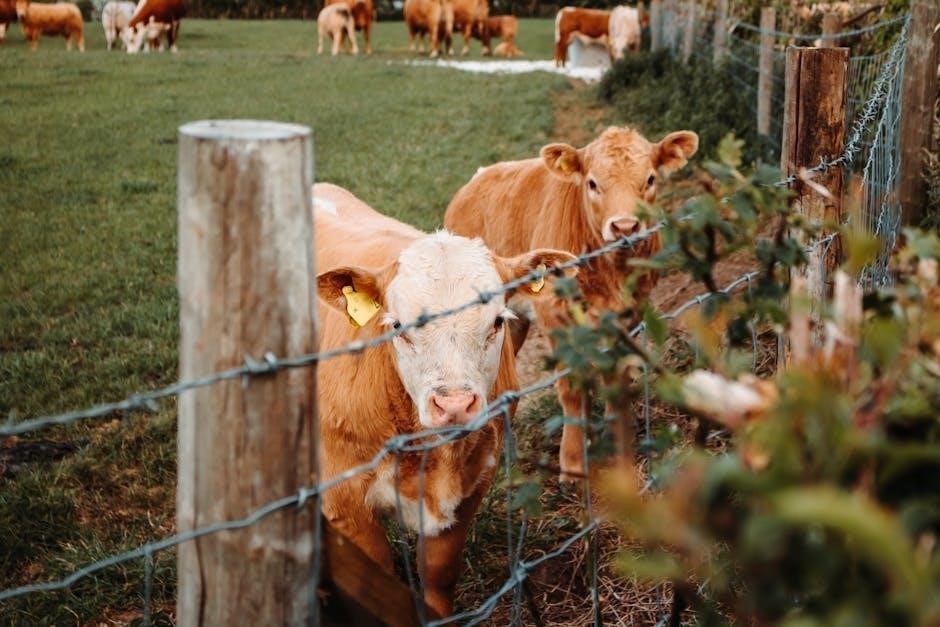
Livestock significantly impacts required fence post spacing. Cattle, being heavier and capable of substantial force, necessitate closer post intervals – typically 8 to 12 feet – for robust containment. Horses, prone to leaning and pushing, also benefit from tighter spacing, around 8 to 10 feet, to prevent damage.
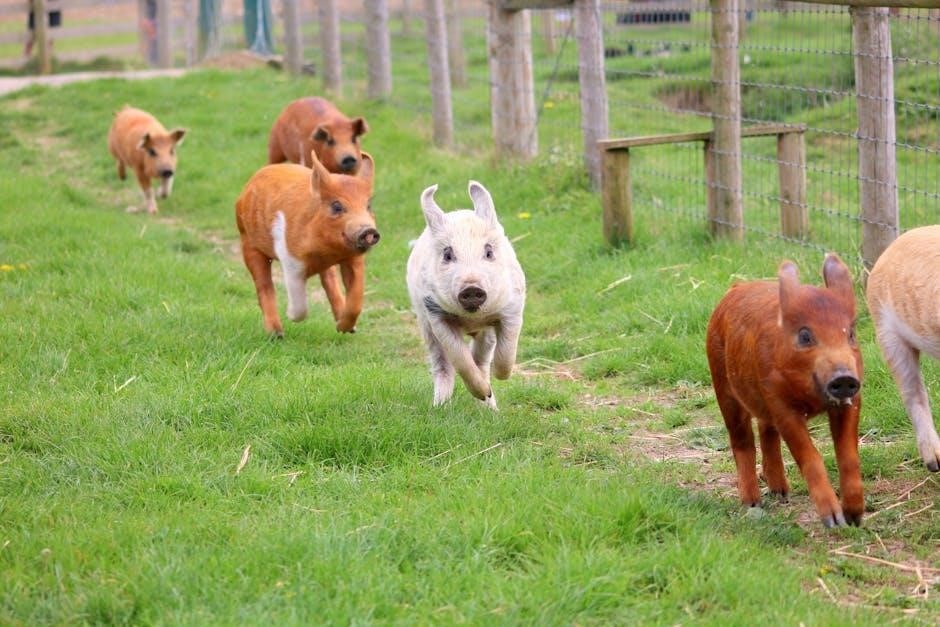
Smaller livestock like sheep and goats require closer spacing, often 6 to 8 feet, to deter crawling under or through the fence. Pigs, notorious for rooting and challenging fences, demand the closest spacing, ideally 4 to 6 feet, alongside robust fencing materials. Considering animal behavior ensures effective and long-lasting enclosure.

Spacing for Cattle
For cattle, a standard post spacing of 8 to 12 feet is generally recommended, balancing cost-effectiveness with adequate security; Heavier breeds or those prone to challenging fences require the closer end of this range – 8 feet. Utilizing sturdy posts, like treated wood or metal T-posts, is crucial.
Consider the cattle’s temperament; more assertive animals benefit from reduced spacing. Multiple strands of wire, properly tensioned, enhance containment. Regularly inspect the fence line for signs of stress or damage, particularly around gates and corners, to maintain a secure and reliable enclosure for your herd.
Spacing for Horses
Horses demand a more robust fencing system than many other livestock, necessitating careful post spacing. A typical recommendation is 10 to 14 feet between posts, but this varies with breed and behavior. High-strung or playful horses require closer spacing – around 8 to 10 feet – to prevent injury and escape.
Strong, well-braced posts are essential, as horses readily lean and push against fences. Smooth wire or specifically designed horse fencing (like coated wire or webbing) minimizes injury risk. Regular inspection is vital; horses are adept at finding and exploiting weaknesses in fencing, demanding consistent maintenance.
Spacing for Sheep and Goats
Sheep and goats, being smaller and more agile, require different fencing considerations. Post spacing can generally range from 8 to 12 feet, depending on the breed and the pressure they exert. Goats, notorious for testing boundaries, often necessitate closer spacing – around 8 feet – and a more robust fence design.
Woven wire fencing with smaller openings is ideal to prevent escapes, particularly for lambs and kids. Electric fencing can be a valuable addition, deterring climbing and pushing. Regularly check for weaknesses, as sheep and goats can quickly exploit gaps or damaged sections, potentially leading to predation or wandering.
Spacing for Pigs
Pigs demand exceptionally strong and closely spaced fencing due to their powerful build and persistent rooting behavior. Post spacing should ideally be between 6 to 8 feet, utilizing sturdy posts firmly set in the ground. Woven wire with hog panels, or a combination of electric fencing and robust posts, is highly recommended.
Reinforced bottom rails are crucial to prevent pigs from digging underneath the fence. Electric fencing, positioned low to the ground, effectively discourages rooting. Regularly inspect the fence line for damage, as pigs will relentlessly test its integrity. Consider using angled bracing for added stability, especially in areas prone to high pig pressure.
Terrain and Ground Conditions
Varied landscapes significantly impact optimal fence post spacing. Hilly terrain necessitates closer post spacing – typically 6 to 8 feet – to maintain fence line integrity and prevent sagging under stress. On flat land, standard spacing of 8 to 10 feet is often sufficient.
Soil type is equally critical; sandy or loose soil requires deeper post setting and potentially closer spacing compared to dense clay. Rocky ground may demand specialized post-driving techniques or alternative post types. Thoroughly assess the ground conditions before installation, adjusting spacing accordingly to ensure a stable and long-lasting fence.
Hilly vs. Flat Land
Constructing fences across undulating terrain presents unique challenges. On hillsides, gravity exerts considerable force, increasing stress on posts and wire. Consequently, reduce post spacing to 6-8 feet for enhanced stability, preventing potential fence failure. Utilize bracing strategically to counteract lateral pressure.
Conversely, flat land allows for wider post spacing – generally 8-10 feet – as there’s less gravitational strain. This reduces material costs and installation time. However, even on level ground, consider subtle elevation changes and adjust spacing as needed to maintain a consistently taut and secure fence line, ensuring effective containment.
Soil Type Considerations
Soil composition dramatically impacts fence post stability. Sandy soils offer poor support, necessitating closer post spacing (6-8 feet) and potentially larger diameter posts or concrete footings. Clay soils, while providing better initial support, can expand and contract with moisture changes, potentially loosening posts over time.
Loamy soils, a balanced mix, generally allow for standard spacing (8-10 feet). Rocky soils can present installation difficulties but offer excellent anchoring once posts are set. Always assess soil drainage; poorly drained areas weaken post foundations. Proper post treatment and depth are crucial regardless of soil type, maximizing longevity.
Fence Type
Different fence styles demand varying post spacing. Woven wire requires closer spacing – typically 8-10 feet – to prevent sagging and maintain animal containment. Barbed wire, with its inherent tension, can often utilize 10-12 foot spacing, though tighter spacing increases stability.
Electric fences, relying on conductivity rather than physical barrier strength, generally need 10-15 foot spacing, depending on charger power and animal pressure. Post and rail fences, designed for aesthetics and light livestock, can span 8-12 feet. Consider the fence’s primary purpose and the animals it will contain when determining optimal post intervals.
Woven Wire Fence Spacing
For woven wire fences, maintaining consistent spacing is paramount to prevent sagging and ensure effective animal control. A standard recommendation is 8 to 10 feet between posts, particularly for fields containing smaller livestock like sheep or goats. Closer spacing—around 8 feet—is crucial for tighter weaves and heavier animal pressure.
Using sturdy corner and line posts, along with proper bracing, enhances the fence’s overall strength. Intermediate posts should be adequately secured to the wire to distribute tension evenly. Regularly inspect the fence for any signs of weakness or sagging, adjusting wire tension as needed to maintain its integrity.
Barbed Wire Fence Spacing
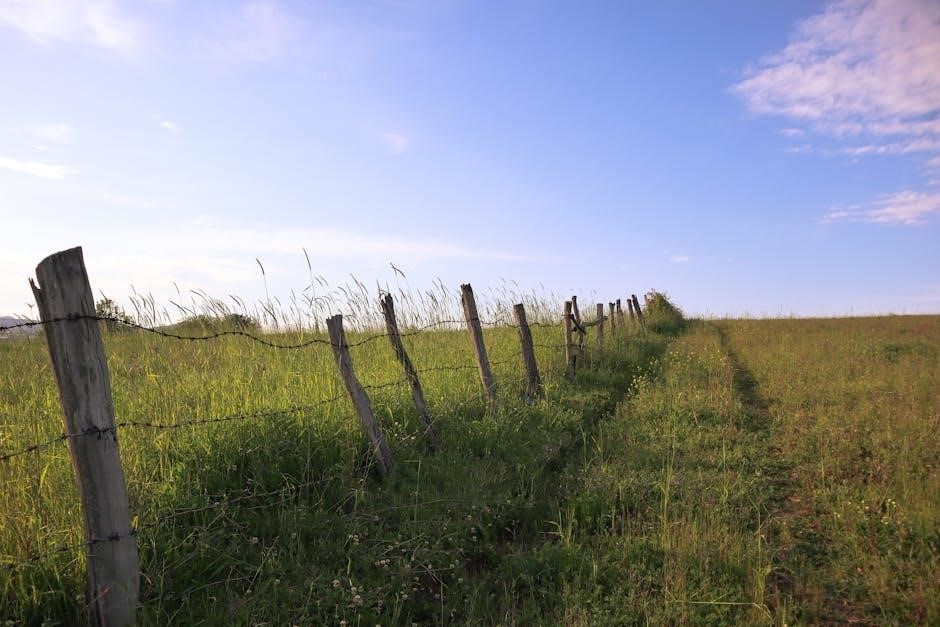
Barbed wire fencing typically requires wider post spacing compared to woven wire, generally ranging from 10 to 12 feet between posts. This wider spacing is due to the wire’s inherent strength and ability to maintain tension over longer distances. However, terrain and livestock type influence optimal spacing.
For cattle, 12-foot spacing is often sufficient, while horses may benefit from 10-foot spacing to minimize stretching. Corner posts must be exceptionally strong and well-braced to withstand the significant tension of the barbed wire. Regular inspection and wire tightening are vital to prevent sagging and maintain a secure boundary.
Electric Fence Spacing
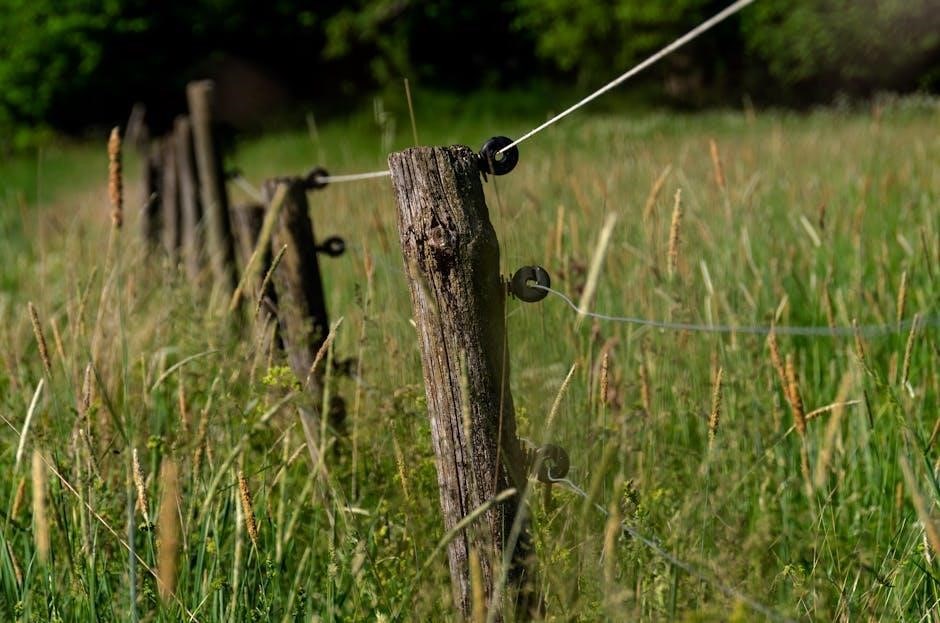
Electric fences offer flexibility in post spacing, often ranging from 10 to 20 feet, depending on the number of wires and the animals contained. Fewer wires necessitate closer spacing, while multiple wires allow for wider intervals. Utilizing fiberglass or wooden posts is common, with spacing adjusted to maintain adequate voltage throughout the fence line.
For temporary or rotational grazing, lighter-duty posts spaced 15-20 feet apart are suitable. Permanent electric fences benefit from more robust posts at 10-12 foot intervals. Proper grounding and consistent vegetation control are crucial for effective shock delivery and animal containment, ensuring a reliable barrier.
Post and Rail Fence Spacing
Post and rail fences, known for their aesthetic appeal, typically require posts spaced 8 to 12 feet apart for optimal stability. The number of rails – usually three or four – influences this distance; more rails allow for slightly wider spacing. Robust wooden posts are essential, often pressure-treated for longevity, resisting rot and insect damage.
Consider the breed and size of livestock when determining spacing. Larger animals necessitate closer post intervals. Securely attaching rails to posts with screws or bolts, rather than nails, enhances durability. Regular inspection and maintenance are vital to prevent sagging and ensure the fence remains a safe and effective boundary.
General Spacing Guidelines
Typically, 8-10 foot spacing suits most farming needs, balancing cost and strength. However, terrain, livestock, and fence type significantly impact ideal post placement.
Standard Spacing for Most Applications
For general-purpose farming, a standard spacing of 8 to 10 feet between posts often provides a good balance between structural integrity and cost-effectiveness. This spacing works well for many livestock types, particularly cattle and horses, when utilizing woven wire or barbed wire fencing.
However, it’s crucial to remember this is a baseline. Factors like soil quality and the presence of significant slopes can necessitate closer spacing – perhaps 6 to 8 feet – to maintain fence stability. Consistent spacing ensures even tension distribution, preventing sagging and extending the fence’s lifespan. Always prioritize a robust foundation for long-term performance.
Corner and End Post Considerations

Corner and end posts bear the brunt of the fence’s tension, demanding significantly more robust construction than line posts. Employing larger diameter posts – potentially 6×6 inches or even 8×8 inches – is essential for these critical locations. Proper bracing is paramount; H-braces or diagonal braces effectively counteract the pull of the fence wires.
Deeply setting these posts, extending at least 3-4 feet into the ground, provides superior anchoring. Concrete around the base further enhances stability, especially in softer soils. Neglecting these key areas compromises the entire fence system, leading to sagging and potential livestock breaches. Prioritize strength and security at corners and ends.
Bracing Corner Posts
Effective bracing is crucial for corner posts, resisting the significant inward or outward pressure from the fence line. An H-brace, utilizing two diagonal braces forming an ‘H’ shape, distributes the load efficiently. Alternatively, a single diagonal brace, angled between 30-45 degrees, provides substantial support.
Braces should be securely attached to both the corner post and a separate, firmly anchored brace post. Using substantial lumber for braces – 4×4 inches is common – ensures durability. Proper connection methods, like through-bolting, are superior to simply nailing. Regularly inspect bracing for signs of wear or loosening, maintaining fence integrity.
Using Larger Posts for Ends
End posts, similar to corner posts, bear substantial tension from the fence line and require increased strength. Employing larger diameter posts – 6×6 inches or even 8×8 inches – provides a more robust anchor point. Deeper post setting is also vital; extending the post’s buried length by at least 6-12 inches beyond standard spacing enhances stability.
Consider using treated lumber or naturally rot-resistant wood like cedar or locust for end posts, prolonging their lifespan. Proper concrete footing installation is essential, ensuring the post is firmly embedded and resists leaning or pulling. Regularly inspect end posts for any signs of movement or deterioration.

Post Materials and Spacing
Selecting appropriate post materials – wood, metal (T-posts), or concrete – significantly impacts spacing requirements and overall fence durability, influencing long-term costs.
Wood Post Spacing
Traditionally, wood posts offer a cost-effective fencing solution, but require careful spacing considerations. For most general-purpose farm fencing, an 8 to 10-foot spacing between wood posts is standard. However, this can be reduced to 6-8 feet in areas with heavier livestock like cattle, or on uneven terrain.
Post diameter is also crucial; larger diameter posts (6-8 inches) can handle wider spacing. Always use pressure-treated wood to resist rot and insect damage, extending the fence’s lifespan. Proper post depth – at least one-third of the post’s length should be buried – contributes to stability, minimizing the risk of leaning or shifting over time. Consider soil type when determining depth.
Metal Post (T-Post) Spacing
T-posts, known for their durability and ease of installation, are a popular choice for many farm fencing applications. Generally, T-posts can be spaced further apart than wood posts, typically ranging from 8 to 12 feet. However, for woven wire or heavier gauge wire, closer spacing – around 8-10 feet – provides better support and prevents sagging.
For electric fencing, 10-12 foot spacing is often sufficient. Ensure posts are driven deep enough (at least 2 feet) for stability, especially in loose soil. Using a T-post driver simplifies installation and ensures proper depth. Consider adding brace posts at regular intervals for increased strength, particularly on long fence runs.
Concrete Post Spacing
Concrete posts offer exceptional strength and longevity, making them ideal for demanding fencing applications. Due to their weight and stability, concrete posts generally require wider spacing than wood or metal posts, typically ranging from 10 to 16 feet apart. This wider spacing reduces material costs while maintaining structural integrity.
However, terrain and fence type influence optimal spacing. For woven wire or barbed wire, 10-12 feet is recommended. Electric fences can often utilize 12-16 foot spacing. Proper installation is crucial; concrete posts require a solid footing below the frost line to prevent shifting. Consider using a concrete mixer for consistent footing quality.
Tools and Techniques for Accurate Spacing
Precision is key! Utilize measuring tapes for consistent distances and string lines to guarantee straight fence runs, ensuring a professional and secure farm boundary.
Using a Measuring Tape
A reliable measuring tape is the cornerstone of accurate fence post spacing. Opt for a long tape – 50 or 100 feet – to minimize the need for frequent repositioning. Begin by measuring the desired spacing interval, typically between 8 and 12 feet, depending on livestock and terrain.
Carefully mark each post location as you measure, ensuring consistent distances along the entire fence line. Double-check measurements periodically to prevent cumulative errors. Consider using a tape measure with a locking mechanism to hold the measurement while marking. Accuracy at this stage directly impacts the fence’s overall stability and longevity, preventing future sagging or shifting.
String Lines for Straightness
Maintaining a straight fence line is crucial for both aesthetics and structural integrity. Utilize sturdy string lines stretched taut between corner posts to serve as visual guides. Secure the string lines at a consistent height, representing the desired top of the fence.
As you install posts, align them precisely with the string line. This ensures a uniform appearance and prevents the fence from wandering or creating weak points. Regularly check the string line’s tension and alignment, especially over long distances. String lines are invaluable for achieving a professional-looking and robust fence, minimizing future adjustments and repairs.
Advanced Considerations
Beyond basic spacing, account for regional weather patterns and potential wind loads. Plan for future farm expansion, allowing flexibility in fence line adjustments.
Wind Load and Regional Weather
Considering your local climate is paramount for fence longevity. Areas prone to high winds necessitate closer post spacing to withstand increased pressure. Strong gusts exert significant force, potentially causing wider-spaced posts to lean or fail.
Regions experiencing heavy snowfall require posts tall enough to support the anticipated snow load, and potentially closer spacing to prevent sagging under the weight.
Furthermore, temperature fluctuations can impact post stability; freeze-thaw cycles can heave the ground, stressing posts. Adjust spacing and post depth accordingly. Prioritize robust construction in harsh environments to minimize maintenance and ensure long-term fence integrity, safeguarding your investment and livestock.
Future Expansion Plans
Anticipating future farm growth is crucial during fence installation. If you foresee expanding pastures or adding livestock, proactively plan for adaptable fencing.
Consider installing posts with slightly wider spacing than currently needed, allowing for easier extension later. This avoids the costly and disruptive process of completely rebuilding sections.
Strategically position corner and end posts to facilitate future fence line extensions. Leaving extra post length above ground provides attachment points for additional wire or rails. Thoughtful planning now saves time, money, and effort when your farm evolves, ensuring a scalable and efficient fencing system.
Troubleshooting Common Spacing Issues
Addressing post leaning or sagging requires immediate attention; these issues often stem from inadequate initial spacing or unstable ground conditions, compromising fence integrity.
Posts Leaning or Shifting
Detecting posts that are leaning or have shifted is crucial for maintaining fence security. This often indicates insufficient post depth, inadequate bracing, or unstable soil. Examine posts after heavy rainfall or periods of livestock pressure.
To rectify leaning posts, consider adding additional bracing, particularly diagonal braces anchored firmly in the ground. For shifted posts, re-set them, ensuring proper depth and compaction of the surrounding soil. If the soil is consistently problematic, explore using larger diameter posts or concrete footings for increased stability. Regularly inspect corner and end posts, as they bear the brunt of the fence’s tension.
Preventative measures, like proper initial installation and periodic inspections, can minimize these issues, saving time and resources in the long run.
Fence Sagging
Fence sagging is a common issue, typically stemming from inadequate wire tension, excessive post spacing, or post deflection over time. It compromises the fence’s effectiveness, allowing livestock to escape or wander. Regularly inspect the fence line, particularly after periods of extreme weather or increased animal activity.
To address sagging, re-tension the wire using a fence stretcher. If sagging persists, consider adding additional posts to reduce the span between supports. Ensure posts are plumb and securely anchored. For woven wire fences, sagging often indicates insufficient vertical stays; adding or tightening these can help.
Proactive maintenance, including consistent tension checks and prompt repairs, will prevent significant sagging and maintain a secure perimeter.

Resources and Further Information
For detailed guidance, consult your local agricultural extension office or utilize online fence calculators to determine optimal post spacing for your specific needs.
Agricultural Extension Offices
Local agricultural extension offices represent an invaluable, often free, resource for farmers. These offices, typically associated with state universities, provide expert advice tailored to regional conditions.
They offer workshops, publications, and one-on-one consultations regarding best practices for farm infrastructure, including fence construction and post spacing.
Extension agents can assess your specific terrain, livestock type, and budget to recommend the most appropriate spacing intervals.
Furthermore, they stay current on local regulations and potential grant opportunities related to agricultural improvements.
Finding your nearest extension office is easily done through a state’s Department of Agriculture website or a simple online search.
Online Fence Calculators
Numerous online fence calculators simplify the often-complex task of determining optimal post spacing. These tools typically require inputs such as fence length, post type (wood, metal, concrete), terrain characteristics, and livestock pressure.
Based on this data, the calculator estimates the number of posts needed, spacing intervals, and even material costs.
While convenient, remember these are estimations; always cross-reference results with local expertise.
Several agricultural supply websites and fencing manufacturers offer free calculators.
Utilizing these resources can save time and reduce material waste, contributing to a cost-effective and structurally sound fence installation.